
• DCGEN
  • Core Technology
  • HOPE Score W
HOPE Score W

HOPE Score W®  is
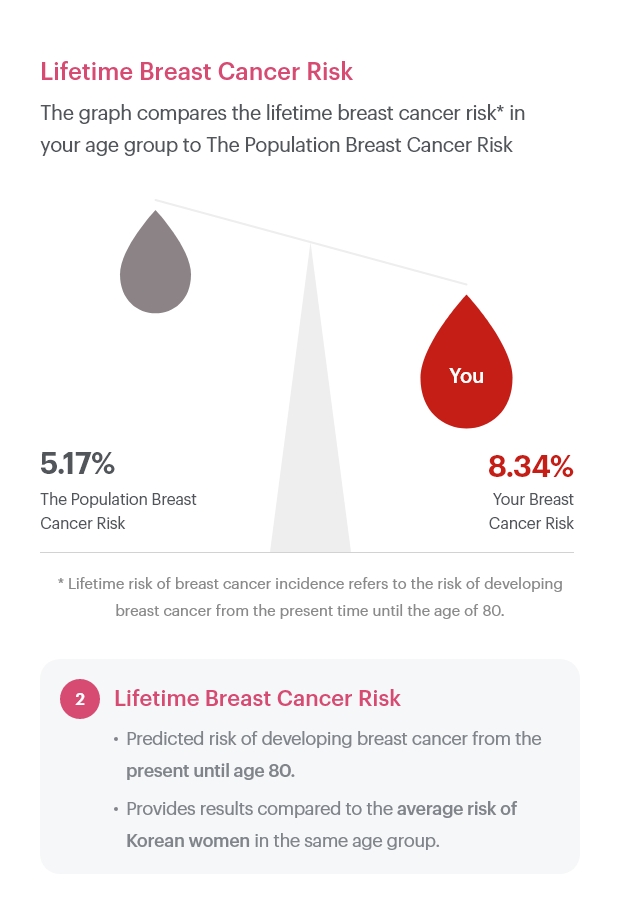
a specialized solution that predicts an individual’s lifetime breast cancer risk.
It provides a personalized assessment by analyzing Polygenic Risk Scores (PRS)
based on 207 SNPs and integrating them with non-genetic risk factors (NGRF).
What is HOPE Score W®?

Breast cancer risk depends on both inherited genetics and
lifestyle factors, where hidden DNA risks and daily habits together
influence cancer development.

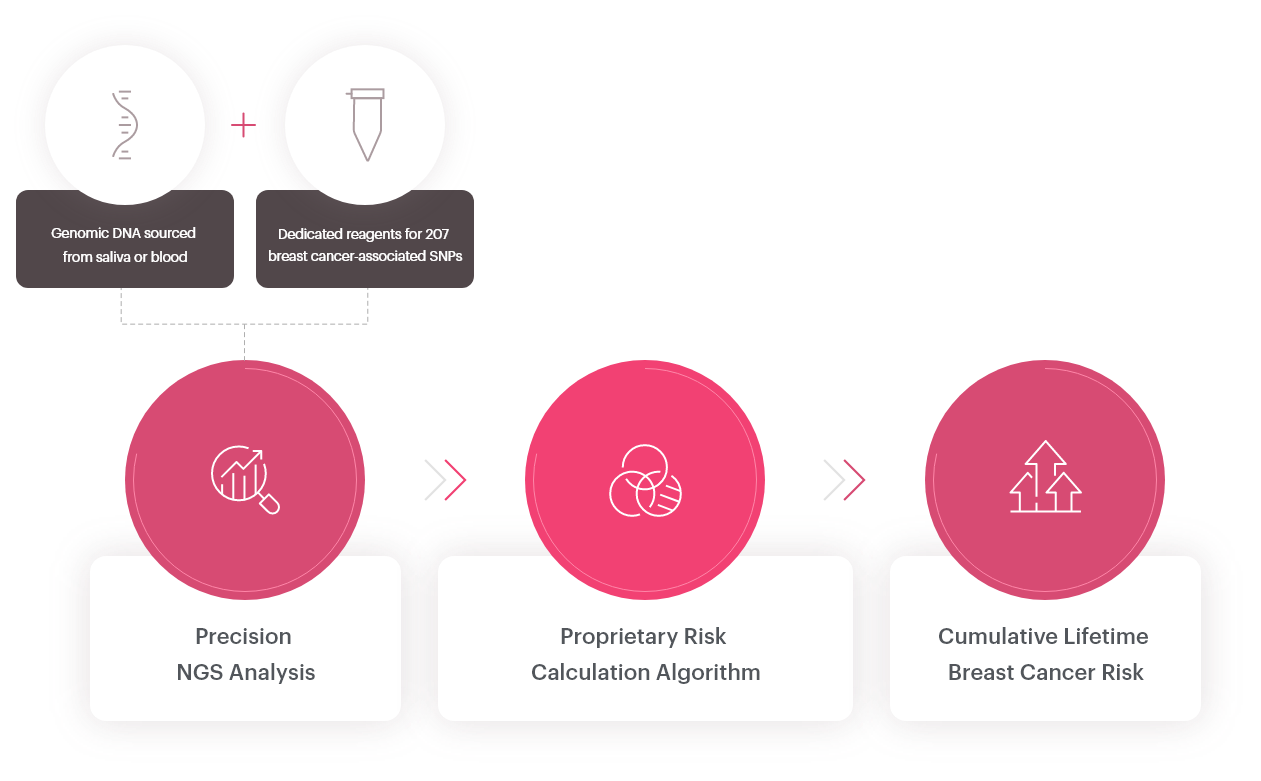
  • 207 SNPs Based PRS Analysis HOPE Score W uses an advanced PRS algorithm to analyze 207 genetic markers (SNPs),
    providing a highly accurate assessment of your innate genetic susceptibility.
  • Comprehensive Risk with Lifestyle Data By integrating lifestyle and clinical factors (NGRF) with genetic data,
    it predicts your personalized lifetime breast cancer risk with superior accuracy.
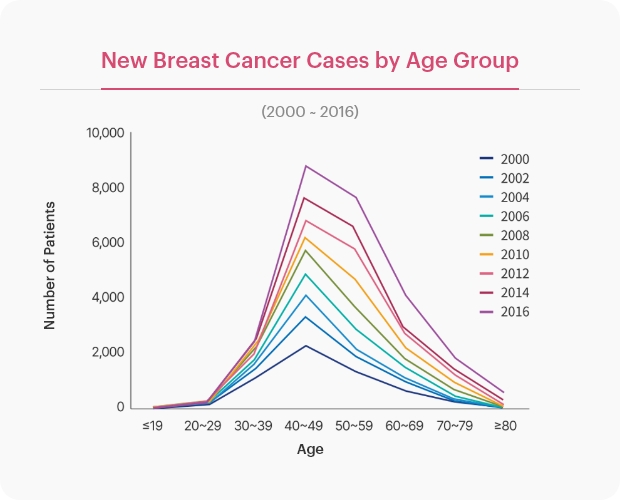
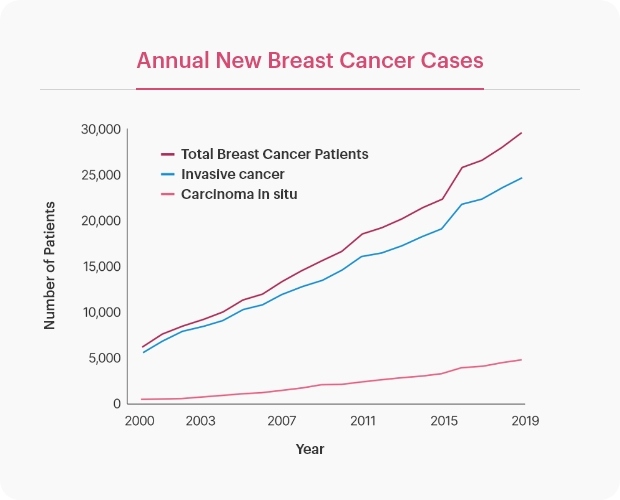
Breast Cancer Trends in Korean Women

The number of new breast cancer cases is steadily increasing every year.
Unlike in Western countries, there is a high rate of diagnosis among women under the age of 50.

  • * Korea Central Cancer Registry 2021

  • * Statistics Korea 2019

Clinical usefulness of HOPE Score W®?

HOPE score w was developed and validated based on approximately 20,000 sets of
genetic data from Korean breast cancer patients and healthy individuals.
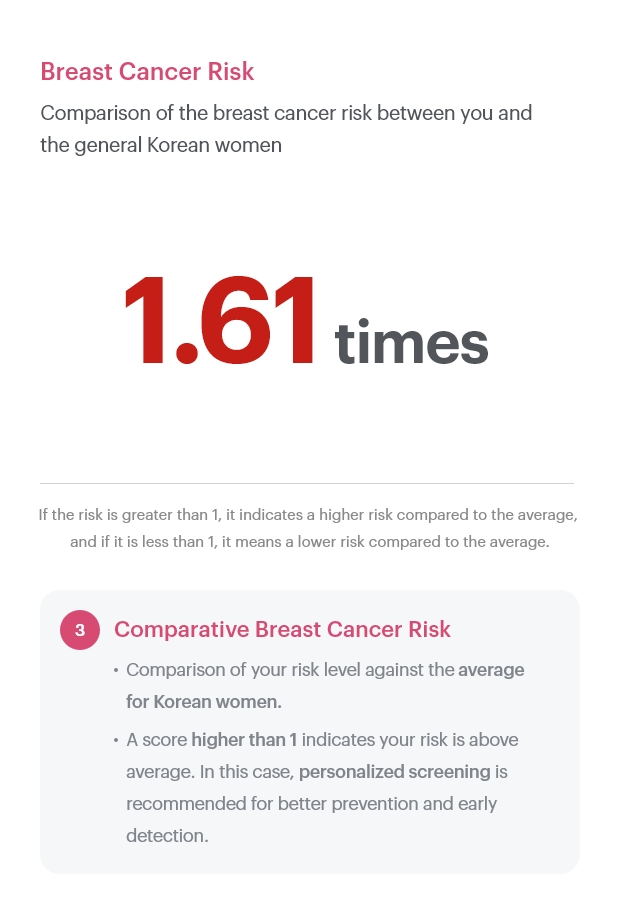
Through the HOPE score w test, you can identify your lifetime risk of breast cancer and take appropriate actions,
including personalized screenings and preventive measures.

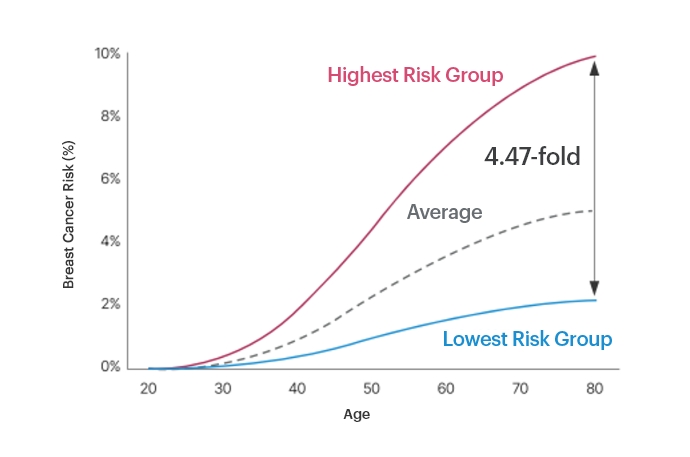
Cumulative Lifetime Risk of
Breast Cancer
  • By utilizing genomic data from 20,000 individuals (including breast cancer patients and healthy controls), we have stratified the population into seven distinct risk groups.
  • When estimating the cumulative lifetime risk for each group, the highest-risk group exhibited a breast cancer incidence risk 4.47 times higher than that of the lowest-risk group.
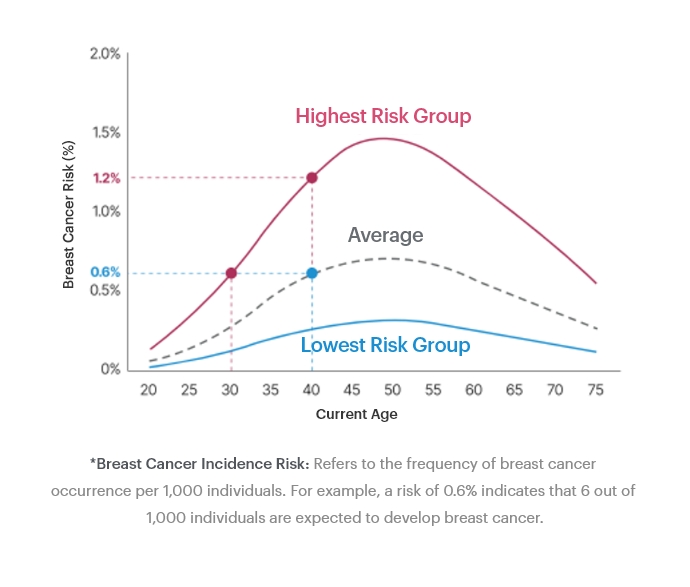
5-Year Breast Cancer
Incidence Risk
  • National guidelines recommend regular breast cancer screenings starting from age 40.
  • At age 40, the 5-year incidence risk for the Highest Risk Group is approximately double (2x) that of the Average Risk Group (0.6%).
  • The Highest Risk Group reached the average risk level (0.6%) at age 33, which is 7 years earlier than the average population.
  • Therefore, it is crucial to implement personalized screening and preventive management based on an individual's specific risk profile.
Why HOPE Score W®?
  • Advanced
    NGS Technology

    High-Precision Genomic Analysis We use Next-Generation Sequencing (NGS) to analyze
    207 breast cancer-related SNPs simultaneously with high speed and precision.

  • Innovative
    PRS Model

    For a scientific risk assessment,
    we apply the PRS model,
    a breakthrough technology selected by MIT, to integrate multiple genetic effects into a single accurate score.

  • Optimized for
    Koreans

    Our algorithm is developed and validated using 20,000 sets of Korean clinical data, ensuring the highest accuracy specifically for Korean women.

Application of HOPE Score W® results

Chemotherapy is effective in only about 20% of hormone receptor-positive early-stage
breast cancer patients.

If you have any further questions,
please contact DCGEN.

Counseling